


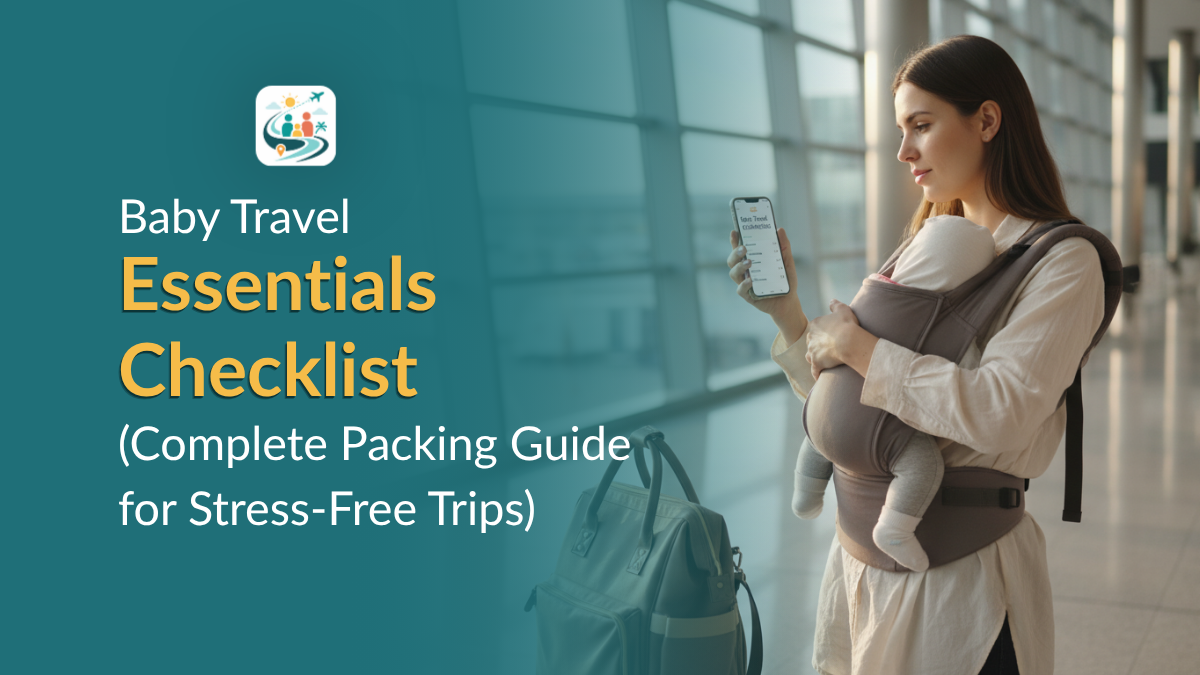
The hardest part of travelling with a baby isn’t the flight. It’s the week before, standing over an open suitcase, trying to work out whether you genuinely need the bottle steriliser or whether that’s just anxiety talking.
This checklist covers the whole trip: what goes in the suitcase, what waits at your destination, and what you should leave home entirely. It’s written for babies roughly 0 to 12 months.
For the separate question of what goes in the bag you keep at your seat on the plane, we have a dedicated carry-on packing list for baby — this guide deliberately doesn’t repeat it.
Key takeaways
- Pack for your destination’s gaps, not for your home routine. Most of what you use daily is buyable or rentable where you’re going.
- Sleep is the thing most worth over-preparing for. Everything else has a workaround.
- Bulky gear (cot, high chair, bath tub) is usually cheaper to rent than to check.
- Trip length changes the list far more than destination does.
- Bring the specific brand only where substitution genuinely matters: formula, medication, and anything tied to an allergy.
Start here: the three questions that shape your list
Before writing anything down, answer these. They determine most of your decisions.
How long is the trip? Under 4 nights, bring what you need. Over a week, plan to buy consumables at your destination instead of hauling them.
What kind of accommodation? A hotel room with no fridge, no kettle and no bath is a completely different packing problem from a rental apartment with a kitchen. Ask before you pack, not after you land.
Can you buy nappies and formula there? In most of Europe, North America, Australia and urban Asia, yes, easily. In rural or remote destinations, or if your baby uses a specialised formula, assume no.
Sleep gear: the section worth getting right
Sleep is where trips fall apart. A baby who won’t settle in an unfamiliar room affects every other part of the day, and it’s the hardest thing to fix once you’ve arrived.
Bring:
- Sleep sack or swaddle in your baby’s usual tog. This is the single strongest sleep cue you can pack, and it weighs nothing.
- One fitted sheet from home, unwashed. The familiar smell does real work.
- Portable white noise machine, or a downloaded track and a small speaker. Hotel walls are thin and unfamiliar noise wakes babies who’d otherwise sleep through.
- Blackout solution. Travel blackout blinds with suction cups are worth the space. Binder clips, bulldog clips or clothes pegs for existing curtains are a cheaper fallback that works nearly as well.
Consider renting or borrowing:
- Travel cot or pack-and-play. Most hotels provide one free — always ask at booking rather than assuming. Rental services deliver to accommodation in most major destinations.
Leave at home:
- Full-size monitors with dedicated screens. In a hotel room you’re within earshot anyway, and in a rental a phone-based monitor covers it.
If your trip involves a flight, sleep planning starts before you land. Our guides to helping a toddler sleep on a plane and red-eye flights with toddlers both apply to older babies as well.
Feeding setup at your destination
The flight is a couple of hours. The trip is a week. Plan for the week.
Breastfeeding:
- Nursing cover if you use one
- Breast pads, more than you think
- Pump, plus a manual backup if you rely on an electric one. Power access varies more than people expect, and a dead pump on day two is a genuine problem.
- Milk storage bags and a small cool bag
Bottle feeding:
- Bottles, plus one more than your usual daily rotation
- Formula for the full trip if your baby uses a specific brand or a hypoallergenic formula. Substitution isn’t always possible abroad, and a formula change mid-trip is not the time to experiment.
- Bottle brush and a small bottle of washing-up liquid. Rentals rarely stock a brush and hotel bathrooms never do.
- Sterilising method that suits your accommodation: microwave steriliser bags if there’s a microwave, cold-water tablets if there isn’t.
Starting solids:
- Silicone bib that wipes clean rather than needing washing
- A few pouches for travel days, then buy locally
- Suction bowl and a soft spoon
- Portable booster seat or fabric high chair harness. Restaurants abroad don’t reliably have high chairs, and this weighs almost nothing.
A note on water: if you’re going somewhere with non-potable tap water, formula needs bottled water that’s been boiled and cooled, not just bottled water straight from the shop. Check the mineral content too, as some bottled waters are too high in sodium for infant formula. Ask your pediatrician before you travel if you’re unsure.
Bath and hygiene away from home
Consistently the most under-packed category, because it’s the one people assume the accommodation covers.
Bring:
- Your usual wash and any eczema or barrier creams. Skin reacts to new water, new climate and new products all at once — this isn’t the trip to switch.
- Nappy cream in a full-size tube, not a sample. Heat and different nappies mean more rash, not less.
- A few muslins, which double as towels, sunshades, burp cloths and floor mats
- Nail clippers or a file, always forgotten and always needed by day three
- Thermometer
Consider:
- Inflatable bath tub or bath support if your accommodation only has a shower. Rentals often stock these; check before you buy one.
Leave at home:
- Full-size toiletry bottles. Decant.
- Baby towels. Every hotel has towels.
What to rent instead of bring
This is where most families over-pack. The rule of thumb: if it’s bulky, has a rental market at your destination, and isn’t safety-critical, rent it.
| Item | Bring or rent? | Why |
|---|---|---|
| Travel cot | Rent or use hotel’s | Bulky, widely available, usually free at hotels |
| High chair | Rent, or bring a fabric harness | Full chairs are unnecessary; harnesses weigh nothing |
| Bath tub | Rent | Awkward shape, low value per kilo |
| Stroller | Bring | You need it in transit, not just at the destination |
| Car seat | Usually bring | Safety-critical; rental condition is unverifiable |
| Sterilising equipment | Bring the method, not the machine | Tablets or bags travel; units don’t |
| Baby carrier | Bring | Small, and useful the entire trip |
The car seat is the one genuine judgement call. Rental car seats arrive with no history — you can’t know whether they’ve been in a collision, and manufacturers advise replacing a seat after any crash. If you do rent, inspect it properly on collection. If you bring your own, our guides to car seats on airplanes and gate-checking car seats cover getting it there intact.
Clothing: the formula that works
Over-packing clothes is the most common mistake and the easiest to fix.
The rule: outfits for the number of days, plus two, capped at ten. Beyond ten days you’re doing laundry regardless, so packing for fourteen achieves nothing.
Per day, for a baby: one outfit, plus roughly one extra per day for the under-six-months group, who go through more.
Always pack regardless of trip length:
- Two sets of sleepwear
- A warm layer, even for hot destinations — air conditioning and evening temperature drops are real
- A sun hat, for any destination with sun
- Socks, more than seems reasonable
- One outfit you don’t mind losing
Laundry note: a small bottle of travel detergent turns a ten-day trip into a five-day packing job. Most rentals have a machine; most hotels have a sink.
Health and documents
Medical:
- Any prescribed medication in original labelled packaging, with a copy of the prescription
- Infant paracetamol or ibuprofen, dosed by weight per the label
- Rehydration sachets, the thing you’ll be glad to have at 2am in an unfamiliar country
- Basic first aid: plasters, antiseptic, tweezers
- Your pediatrician’s contact details, written down rather than only in your phone
Documents:
- Passport for your baby, for any international travel
- Birth certificate if you’re travelling domestically with a lap infant, since airlines can ask for proof of age. Bring the physical document — some gate agents won’t accept a photo.
- Travel insurance details including your baby on the policy
- Vaccination records, occasionally requested at borders
- A consent letter if you’re travelling without your baby’s other parent. Requirements vary by country and it’s checked more often than people expect.
Our guide to travel documents for infants covers the international requirements in more detail. If you’re still deciding whether to travel at all yet, when babies can fly safely covers the age and medical guidance.
Packing by trip length
| Weekend (2–3 nights) | Week (5–7 nights) | Extended (10+ nights) | |
|---|---|---|---|
| Nappies | Full trip supply | 3 days, then buy | 2 days, then buy |
| Formula | Full trip | Full trip if branded | Full trip if branded |
| Outfits | 5–6 | 9–10 | 10, plus detergent |
| Sleep gear | Full setup | Full setup | Full setup |
| Bulky gear | Rent | Rent | Rent |
| Laundry plan | None needed | Optional | Essential |
Sleep gear is the only row that never scales down. A weekend trip needs the same sleep setup as a month, because the disruption is identical on night one.
Destination-specific additions
Beach or pool: Swim nappies (both disposable and one reusable), rash guard, wide-brim hat, mineral sunscreen for babies over six months, and a pop-up sun shelter. Under six months, shade and clothing rather than sunscreen. Our beach travel with babies guide and beach essentials for babies checklist go deeper on this.
Cold weather: Layers rather than one thick coat, since a bulky coat can’t be worn safely in a car seat. Mittens that actually stay on, which usually means the kind that attach at the sleeve. A warm hat that covers ears.
City trips: A compact stroller that folds one-handed, and a carrier for stairs, cobbles and metro stations without lifts.
Road trips: Window shades, a car-safe mirror, and a bag of things reachable from the front seat. Our road trips with toddlers guide covers the driving-day rhythm.
What to leave home
Almost every family over-packs the same categories:
- Toys. Three is plenty. Novelty matters more than quantity, and destinations have distractions of their own.
- Books. One or two. They’re heavy.
- Full-size toiletries. Decant everything.
- Multiple pairs of shoes. A baby who isn’t walking needs none. A new walker needs one pair.
- Baby food jars for the whole trip. Heavy, and available almost everywhere.
- The changing bag you use at home. It’s usually bigger than you need for travel days.
Our full guide to what not to pack when traveling with kids covers the reasoning behind each of these.
Four weeks out: the timeline that prevents panic
Four weeks before Check passport validity. Book cot with the hotel. Order any specialised formula you’ll need to bring.
Two weeks before Confirm what your accommodation actually provides. Arrange gear rental if you’re using it. Check whether prescriptions need renewing before you go.
One week before Buy consumables. Test any new gear at home — a travel cot your baby has never seen is a bad thing to introduce at 11pm in a hotel room.
Two days before Pack the suitcase. Do laundry so your baby’s familiar-smelling sheet is ready.
Night before Pack the carry-on separately, using our carry-on packing list for baby. Charge everything. Put documents in one place.
When the standard list doesn’t apply
Every checklist, including this one, assumes a baby with no medical needs and no specific sensitivities. That covers most families, not all.
Medical equipment or refrigerated medication: call your airline’s medical or disability line, not the general line, well before you fly. Rules for refrigerated medication vary by carrier and aren’t always on the general baggage page. Bring a printed prescription.
Allergies: bring more of the safe food than you think you need, and learn how to describe the allergy in the local language. Written on a card is more reliable than pronunciation.
Twins or multiples: double the consumables, but not the equipment. One double stroller, not two singles, and one larger changing bag rather than two. You still only have two hands. Our flying with twins guide covers the rest.
Travelling alone with your baby: pack lighter than feels comfortable. Every item is one you’ll carry while also carrying a baby. Flying solo with a baby or toddler covers the logistics.
The 60-second final check
Before you close the door:
- Passport and documents
- Formula and any medication
- Sleep sack, familiar sheet, white noise
- Nappies for the journey, plus the buffer
- Phone chargers
- Car seat, if it’s coming
- Carry-on bag packed separately
Everything else is replaceable at your destination. These seven aren’t, or aren’t easily.
Final thoughts
Most packing anxiety comes from trying to recreate your home setup somewhere else. You can’t, and the attempt is what produces the overloaded suitcase.
What actually travels is the routine, not the equipment: the same sleep sack, the same wash, the same bedtime order of operations. Those cues do more for a baby in an unfamiliar room than any amount of gear.
Pack for the gaps. Rent the bulk. Buy the consumables when you land.
For the whole-family version covering toddlers as well, see our baby and toddler travel packing list. For everything about the journey itself, start with flying with a baby or toddler.
Related guides
Packing
- Baby and toddler travel packing list — the full family checklist
- Carry-on packing list for baby — what stays at your seat
- What not to pack when traveling with kids
- Toddler travel essentials checklist — past the baby stage


