





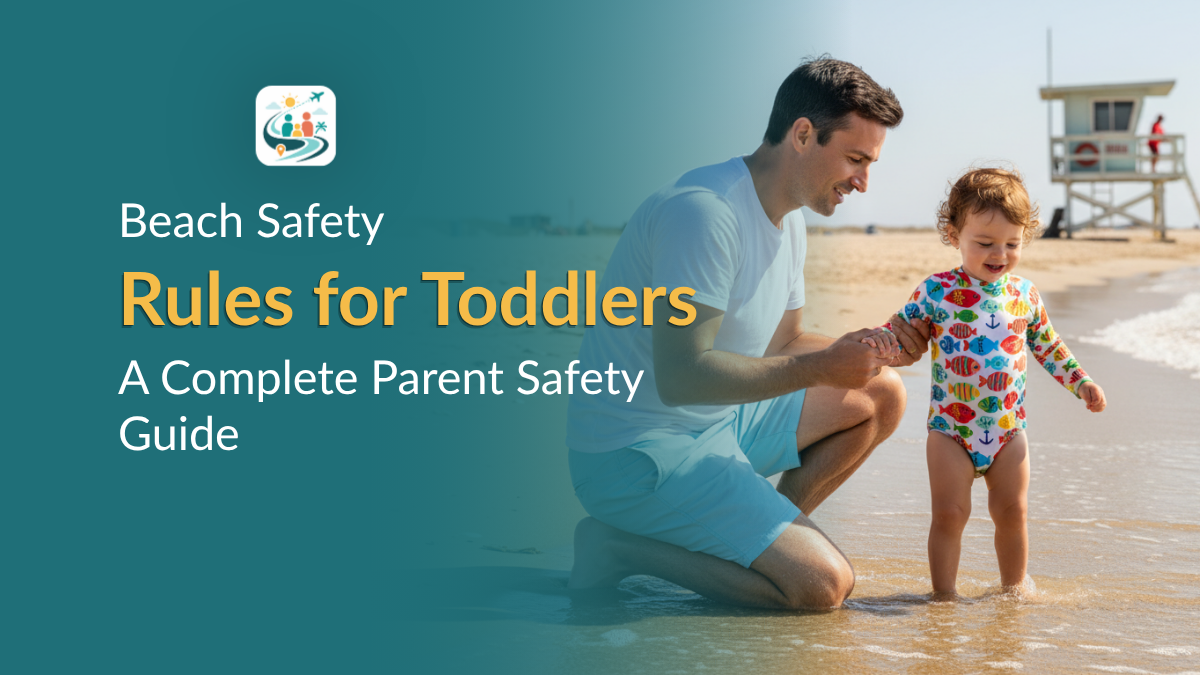
Planning a beach trip with a toddler sounds exciting, but it can also feel stressful for many parents. I still remember the first time I took a toddler to the beach. I was excited to see them enjoy the sand and water, but I constantly worried about waves, crowds, sunburn, and losing sight of them. Toddlers move quickly, explore everything, and do not understand danger yet. Many parents share these same fears. They want their child to have fun, but they also want to feel confident that their toddler is safe.
From both parenting experience and pediatric safety guidance, I have learned that most beach accidents happen when families are not fully prepared. Beaches are safe and enjoyable when parents follow simple, proven safety rules. Strong supervision habits, sun protection routines, and emergency preparation can prevent most toddler injuries. This guide explains clear beach safety rules for toddlers that combine expert safety recommendations with real-life parenting experience to help families enjoy safe and happy beach trips.
Toddler Beach Safety: Quick Takeaway
- Stay within arm’s reach near water
- Choose beaches with lifeguards
- Follow beach flag warnings
- Use Coast Guard approved life jackets
- Apply sunscreen every 2 hours
- Offer water every 20–30 minutes
- Avoid deep sand holes
- Create clear play boundaries
- Prepare a lost child plan
For the full beach trip — packing, naps, feeding, and setup — see our guide to beach travel with babies and toddlers.
Choose a Safe Beach Location First
Choosing the right beach reduces many risks before your toddler even enters the water.
Look for Beaches with Lifeguards
Always select beaches with trained lifeguards. They monitor water conditions and respond quickly during emergencies.
Lifeguarded beaches also tend to post current condition warnings, have marked swimming areas, and keep first aid on site. If you have a choice between a quiet unguarded stretch and a busier guarded one, the guarded beach is the safer option with a toddler, even if it means more crowds.
Destination matters too. Calm, shallow, west-facing beaches are far easier with young children than open surf. Aruba’s western coast is a common example — see is Aruba safe for families and things to do in Aruba with toddlers if you’re still choosing where to go.
Understand Beach Warning Flags
Beach flags communicate current water conditions at a glance. Check them on arrival and again if you’ve been there a few hours, since conditions change through the day with tide and wind.
Beach Flag Safety Guide
| Flag Color | Meaning |
|---|---|
| Green | Safe conditions |
| Yellow | Moderate hazard |
| Red | Dangerous conditions |
| Double Red | Water closed |
| Purple | Marine life hazard |
Parents should always follow flag warnings before allowing toddlers near water.
One important caveat: flag systems are not identical worldwide. The colours above reflect the widely used US system. Some countries use different colours or add flags the US system doesn’t have. If you’re travelling abroad, check the local system on arrival rather than assuming it matches home.
Scan the Sand and Surroundings
Check for broken glass, shells, or fishing hooks before setting up your beach spot. Do this before your toddler is out of the carrier or stroller, not after they’re already exploring.
Check Water Temperature and Weather
Cold water can cause cold shock, which leads to sudden breathing problems. Watch changing weather conditions and strong tides.
Thunder is a hard stop. If you hear it, leave the beach and wait at least 30 minutes after the last sound before returning.
Always Supervise Toddlers Near Water
Supervision is the most important toddler beach safety rule.
Use the Water Watcher Rule
One adult must watch the toddler at all times. Avoid phones and distractions.
The reason this rule exists is that shared supervision fails quietly. When two parents are both “half watching,” each assumes the other has it. Assign one named adult for a set period — 20 or 30 minutes — then hand off explicitly. Saying it out loud matters more than it sounds like it should.
Stay Within Arm’s Reach
Stay close enough to touch your toddler near water. Waves can knock toddlers down quickly.
Arm’s reach is the standard for a reason: a toddler knocked over by a wave in ankle-deep water can struggle to get up, and a child in trouble in water is usually silent rather than splashing or calling out. Watch for a fixed expression and a body sitting low in the water.
Never Allow Toddlers to Swim Alone
Even calm water can become dangerous suddenly.
Teach Toddlers to Ask Permission
Simple safety rules help toddlers develop safe habits early. A rule like “we only go to the water with a grown-up” works better when it’s repeated on land, before the excitement of arrival, rather than introduced at the water’s edge.
Toddler Supervision Chart
| Activity | Supervision Level |
|---|---|
| Playing in dry sand | Close visual supervision |
| Near shoreline | Arm’s reach supervision |
| In shallow water | Constant physical supervision |
| Wearing life jacket | Direct supervision required |
Understand Floaties vs Life Jackets
Floaties may seem helpful but can create false confidence.
Choose Coast Guard Approved Life Jackets
Life jackets provide real flotation support. Look for a Coast Guard approval label, and check the fit before you travel rather than on the beach.
To check fit, lift the jacket up from the shoulders. If it rides up over your child’s chin or ears, it’s too loose.
Coast Guard approval refers to US certification. Outside the US, look for your country’s equivalent, such as CE-approved jackets in the EU.
Our beach essentials for babies checklist covers sizing and what else to pack for each age.
Avoid Relying on Inflatable Floaties
Inflatable floaties can deflate or slip off and should never replace supervision. Arm bands and inflatable rings are toys, not safety equipment, and children can slip out of them without warning.
Dress Toddlers in Safe Beach Clothing
Bright clothing helps parents easily spot toddlers in crowds or water.
Choose Bright Swimsuits
Avoid colors that blend with ocean water. Blues, greens and white are the hardest to spot underwater. Neon orange, pink and yellow are the easiest.
Use UV Protective Clothing
Long sleeve rash guards protect toddler skin from UV rays, and they keep working when sunscreen has washed off or worn away. For a toddler who resists sunscreen application, UV clothing does most of the work for you.
Protect Feet from Hot Sand
Water shoes prevent burns and cuts. Sand can reach temperatures that burn bare feet well before the air feels dangerously hot, and shells or hidden glass are a year-round risk.
Follow Strong Sun Safety Rules
Toddlers have sensitive skin and can burn quickly.
Apply Sunscreen Properly
Use SPF 30 or higher and reapply every two hours.
Apply the first coat 15 to 30 minutes before you leave for the beach, so it has time to bind to skin. Reapplying on a timer doesn’t fix sunscreen that never set properly in the first place. Reapply sooner than two hours after swimming or heavy sweating, whatever the label claims about water resistance.
Sunscreen for Babies Under 6 Months
Babies should stay mostly in shade. Limited sunscreen may be used on exposed areas.
Ask your pediatrician before using sunscreen on a baby this young. Most recommend shade and clothing as the first line of protection, with sunscreen only on small exposed areas where shade and clothing aren’t enough.
Provide Shade During Peak Sun Hours
Sun is strongest between 10 AM and 4 PM. Set up shade before anything else — before sunscreen, before unpacking, before play. It’s the single most useful thing you can do in the first five minutes.
Keep Toddlers Hydrated
Offer water every 20–30 minutes. Provide fresh fruits instead of sugary snacks.
Toddlers won’t reliably ask for water when they need it, and they overheat faster than adults do. Work on the clock rather than waiting for them to say they’re thirsty. Watch for flushed skin, unusual tiredness or irritability, and move into shade at the first sign of any of them.
Watch for Ocean and Water Hazards
Watch for Rip Currents
Rip currents pull swimmers away from shore. Stay in shallow water and follow lifeguard advice.
From the beach, a rip often looks like a channel of choppy or discoloured water cutting through the surf, or a gap where waves aren’t breaking the way they are on either side. If you’re caught in one: stay calm, don’t swim straight back toward shore, swim parallel to the shoreline until you’re out of it, then come in. Signal for help if you can’t.
Be Careful of Waves
Always face the ocean near water. Turning your back is how toddlers get knocked over, and it’s how adults miss the wave that does it.
Teach Toddlers to Respect Water
Explain wave safety using simple words toddlers understand. “Waves push” is more useful to a two-year-old than an explanation of tides.
Toddler Beach Risk Guide
| Risk | Danger | Prevention |
|---|---|---|
| Strong Waves | Knock toddlers down | Stay within arm’s reach |
| Sunburn | Skin damage & dehydration | Use sunscreen & shade |
| Rip Currents | Pull swimmers offshore | Follow lifeguard warnings |
| Hot Sand | Burns feet | Use water shoes |
| Marine Life | Stings & reactions | Teach toddlers not to touch |
| Sand Holes | Collapse risk | Dig only knee deep |
| Crowds | Lost child risk | Create safety boundary |
Practice Safe Sand Play Rules
Avoid Deep Sand Holes
Never allow holes deeper than toddler knee height. Dry sand collapses without warning, and a collapsed hole is far harder to dig out of than it looks. Fill in any holes you dig before you leave, including ones other people left behind if they’re near where children are playing.
Keep Sand Away from Mouth and Eyes
Watch toddlers closely during sand play. Wet wipes and a rinse bottle of fresh water are worth having within reach rather than in the main bag.
Protect Toddlers from Marine Life
Jellyfish Safety
If stung:
- Rinse with salt water
- Remove tentacles carefully
- Do not rub sting
- Seek medical help if symptoms worsen
Don’t rinse with fresh water, which can trigger remaining stinging cells to fire. A purple flag means marine life has been spotted — take it seriously with a toddler even if the water otherwise looks fine.
Avoid Unknown Sea Creatures
Teach toddlers to avoid touching sea animals. “We look, we don’t touch” is a rule most toddlers can follow if it’s set before they find something interesting.
Keep Toddlers Safe from Germs and Illness
Prevent Swallowing Water
Explain that ocean water is unsafe to drink. If a beach posts a bacteria or water quality warning, skip swimming and wet sand play entirely — babies and toddlers are more sensitive to waterborne infections than adults.
Change Diapers in Clean Areas
Always use a restroom or changing mat. Change wet or sandy diapers promptly, since salt and sand together cause irritation quickly.
Wash Hands Before Eating
Use wipes or sanitizer.
Create a Toddler Beach Safety Zone
Set clear play boundaries using towels or beach chairs. A visible perimeter gives a toddler something concrete to understand, and gives you a clear line to notice them crossing.
Choose a meeting spot like a lifeguard tower if toddlers get separated.
Prepare a Lost Child Safety Plan
Crowded beaches increase wandering risk, and beaches are harder than most places to search: sightlines are long but people all look similar at a distance in swimwear.
- Take a photo of your toddler’s clothing before beach play
- Use identification wristbands with your contact number
- Teach toddlers to find lifeguards if lost
- Point out the lifeguard stand on arrival so they know what to look for
- Choose a meeting point and say it out loud to everyone in your group
For the broader picture across all types of travel, see family travel safety for babies and toddlers.
Choose the Best Time of Day for Beach Visits
Early morning and late afternoon visits reduce sun exposure and crowds. They also tend to work better with nap schedules — a beach trip that ends before the midday nap is far more likely to go well than one that runs through it.
Bring Healthy Snacks and Drinks
Hydrating fruits and water help toddlers stay energized and safe. Avoid sugary snacks that increase thirst.
Our toddler travel essentials checklist covers snacks and supplies for the rest of the trip.
Toddler Beach Safety Preparation Checklist
- Sunscreen SPF 30+
- Life jacket
- UV clothing
- Water and snacks
- First aid kit
- ID wristband
- Shade umbrella or tent
- Extra clothes
For everything beyond the beach bag, see our baby and toddler travel packing list.
Toddler Beach Emergency Checklist
- Call emergency services immediately
- Alert lifeguard
- Remove toddler from water
- Check breathing
- Start CPR if trained
- Follow emergency instructions
Know the local emergency number before you travel. It isn’t 911 everywhere, and it’s not something you want to look up during an emergency.
Follow Post-Beach Safety Care
Rinse toddlers with fresh water to remove salt and sand. Check skin for rashes or cuts. Rehydrate toddlers after beach play.
Sunburn often doesn’t show its full extent until several hours later, so check again in the evening rather than assuming the skin you saw at the beach is the whole picture.
Conclusion
Beach trips with toddlers can become some of the most joyful family memories, but safety should always come first. From experience working with family travel safety and observing pediatric recommendations, parents who prepare early feel more relaxed and confident during beach visits. Toddlers are naturally curious and energetic, which makes supervision, preparation, and clear safety rules extremely important. When families follow trusted beach safety practices, children can safely explore the ocean while parents enjoy peaceful and stress-free beach time. With proper planning and awareness, beach trips can stay fun, safe, and memorable for the entire family.
If you’re flying to the beach, start with our guide to flying with a baby or toddler. For the complete beach trip, see beach travel with babies and toddlers.
Related guides
- Beach travel with babies and toddlers — the complete beach guide
- Beach essentials for babies — what to pack by age
- Family travel safety for babies and toddlers
- Is Aruba safe for families


