





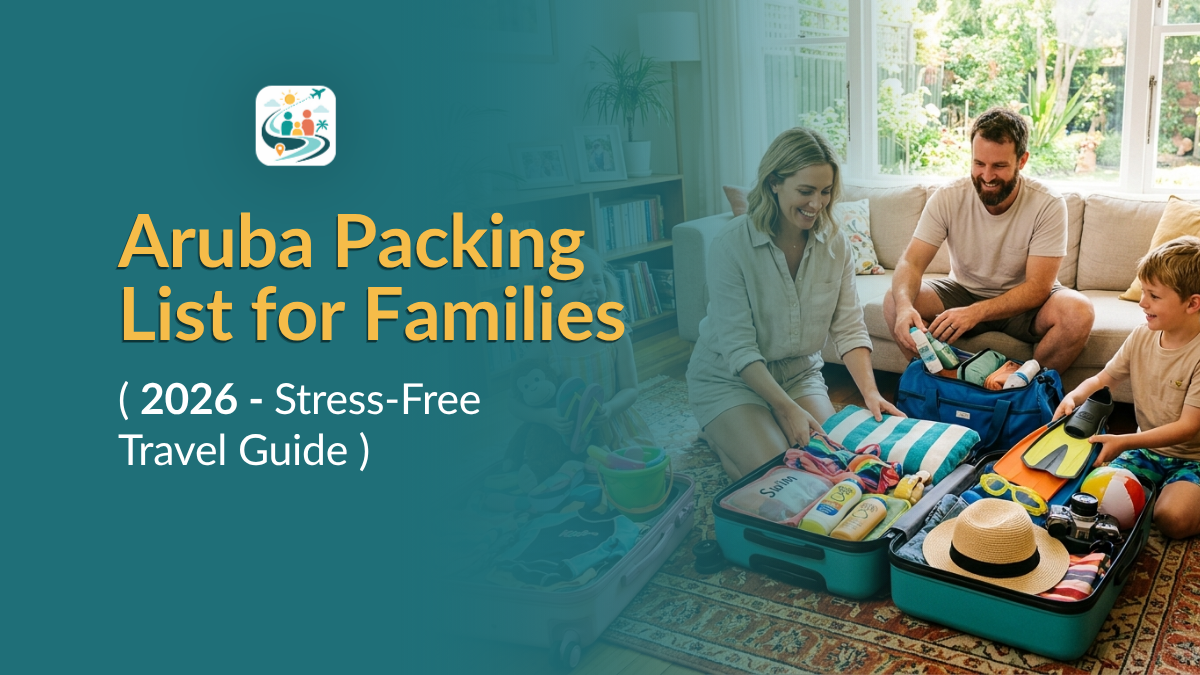
I still remember when I zipped up our suitcases for our first Aruba trip with the kids and immediately unzipped them again, convinced I’d forgotten something important. Packing for children is different from packing for adults, and beach travel in a tropical destination requires its own kind of preparation. Aruba’s strong sun, outdoor adventures, and long travel days create real challenges if you’re not ready for them, and because parents want their children to stay safe, comfortable, and happy, packing can feel like a much bigger responsibility than it should.
Why a family packing list for Aruba matters
One problem keeps showing up over and over: parents either overpack items they never touch or forget the essentials that are much harder to find once they’ve landed. Many travelers also underestimate Aruba’s UV exposure. The island’s trade winds make the heat feel far milder than it actually is — I learned this the hard way after a sunburned first afternoon on Eagle Beach. This list is built from real travel planning experience and packing mistakes, so you can spend your energy on the vacation instead of worrying about what you left behind. Still comparing destinations? See our guide to family-friendly destinations for toddlers.
Quick Aruba family packing takeaways
- Aruba is sunny year-round; sun protection matters every day
- Pack light, breathable clothes and bring more swimsuits than you think you need
- Water shoes are required at Baby Beach and most coral entry points — not optional
- Bring kid-specific gear: rash guards, snacks, travel entertainment
- Keep medicines in your carry-on in case your checked bag is delayed
- Reef-safe on the label doesn’t mean Aruba-compliant — check the ingredients (see below)
- Aruba tap water is safe to drink at resorts and most rental properties; refill reusable bottles freely
Aruba’s reef-safe sunscreen law — what it actually means for your family
Every packing list tells you to bring reef-safe sunscreen. Few mention that Aruba has a legally enforced reef protection ordinance — meaning sunscreen containing oxybenzone, octinoxate, or octocrylene can be confiscated at protected beach entry points, and families may face fines.
“Reef-safe” is not a regulated label. A product can print those words on the front while still containing restricted chemicals. The only way to know is to check the active ingredients list on the back. Compliant sunscreens use mineral filters: zinc oxide or titanium dioxide, or both.
Buy sunscreen at home. If you forget it and buy locally, you’ll pay close to double what you’d pay at home — we paid almost twice the US price for the same reef-safe brand at a resort gift shop — and locally stocked products aren’t guaranteed to be compliant either.
Active ingredients to avoid: oxybenzone, octinoxate, octocrylene. Compliant filters: zinc oxide, titanium dioxide.
Why Aruba’s trade winds make sunscreen reapplication more urgent
Aruba’s UV index regularly hits 11 or 12 between 10 AM and 2 PM year-round. The trade winds keep the air comfortable, which is exactly the problem: families stay out longer than they would in still heat, and there’s no physical discomfort to signal overexposure until the burn has already happened.
Two things accelerate this for kids specifically. First, wind dries sunscreen faster than still conditions do, shortening the effective protection window below the standard 2-hour guideline. Second, children’s skin burns at lower UV thresholds than adult skin.
A practical beach day schedule in Aruba:
- Apply before leaving the room, not at the beach
- Reapply at 90 minutes, not 2 hours
- Cover the spots kids miss: tops of feet, back of knees, back of neck under hair
- Get out of direct sun between 11 AM and 1 PM, or at minimum reapply at the 60-minute mark during this window
Kids and baby essentials
I’ll be honest — the swim diaper thing wasn’t a one-time slip. On our second Aruba trip I packed two boxes of regular diapers and exactly zero swim diapers, then spent our first beach morning explaining to a very unimpressed toddler why she couldn’t go in the water yet while I ran back to the room. This is the stuff that actually gets used every single day.
- Diapers: pack 1 to 2 extra days’ worth beyond what you think you need. Aruba’s heat means more frequent changes than you’re used to.
- Swim diapers: separate from your regular diapers, for pool and beach
- Wipes: more than you think. Sand and sunscreen make for messy hands.
- Formula or bottles, if you’re still in that stage
- A lightweight baby carrier or sling, especially for excursions like Arikok where strollers can’t handle the terrain
- Travel snacks that won’t melt or turn to mush in the heat
- Travel entertainment: a tablet, a couple of books, one new toy saved specifically for the flight
Toddlers need more swimsuits than the standard packing math suggests. A toddler who swims twice a day goes through suits faster than an adult, and wet suits in humid conditions take hours to dry even in Aruba’s wind. Pack at least 1 extra beyond what the trip-length table below suggests.
Core essentials
- Lightweight clothing
- Swimsuits and cover-ups
- Reef-safe sunscreen (zinc oxide or titanium dioxide only — verify the active ingredients), SPF 30 minimum
- Sunglasses and wide-brim hats
- Comfortable walking shoes
- Flip-flops or sandals
- Travel documents
- Reusable water bottles (Aruba tap water is safe at resorts and most rentals — refill freely)
- Small first aid kit
Sun and beach
- Reef-safe mineral sunscreen
- Aloe gel
- Lip balm with SPF
- Beach towels (confirm with your resort or rental — most provide them; don’t check extra)
- Beach bag
- Water shoes — required at Baby Beach and coral entry points, not just useful
For beach setup and timing generally, see beach travel with babies and toddlers.
Rash guards: sizing matters more than you think
Every packing list says bring rash guards. Few mention that standard toddler sizing often leaves the lower back exposed when kids bend, squat, or get carried — which is constantly at the beach.
Size up one from your child’s normal clothing size. It looks a little big on the hanger and fits correctly in motion.
A few other things worth knowing:
- Long-sleeve rash guards are comfortable in Aruba’s trade wind conditions even at 85°F
- UPF 50+ blocks significantly more UV than UPF 30 — worth the difference in Aruba’s UV environment
- Wet rash guards lose UPF effectiveness as the fabric becomes translucent. Reapply sunscreen to covered areas after extended water time.
- Check older rash guards before the trip. Stretched or thinned fabric loses UPF protection.
Our beach essentials for babies checklist covers sun gear for younger children.
Medications and health
Pack medications in your carry-on, not your checked bag. Delayed or lost luggage is more common on island routes than domestic ones, and if your child’s prescription doesn’t arrive until day 3, you may not be able to replace it locally.
Aruba’s pharmacies carry European product lines and operate on Caribbean hours — not 24-hour, and often closed on Sundays and holidays. For what happens if your child needs a doctor, see is Aruba safe for families.
Pediatric-specific formulations (children’s ibuprofen at US dosing concentrations, Pedialyte equivalents, infant antihistamines) may not be stocked at all, or may come in different concentrations than you’re used to.
Pack these as no-local-backup items:
- Prescription medications, plus copies of prescriptions
- Pediatric oral rehydration supplement (Pedialyte or equivalent — Aruba’s heat and sea swimming create dehydration faster than most parents expect, and pediatric versions aren’t reliably available)
- Children’s pain reliever and fever reducer at the weight-appropriate dosing you know
- Allergy medication at the brand and formulation your child has used before
- Motion sickness tablets
- Thermometer
Can buy locally if needed, but bring anyway:
- Basic bandages and antiseptic
- Adult pain relievers
- Antidiarrheal
Apparel
Daywear
Adults: 3 to 5 lightweight tops, 2 to 3 shorts, 2 swimsuits, rash guards
Kids: lightweight outfits, 3 to 4 swimsuits (not 2 — see note above), pajamas, rash guards sized up one
Evening
Aruba’s resort areas are casual. Light dresses or polos, lightweight pants, sandals. One light sweater for air-conditioned restaurants.
Packing by trip length
| Trip length | Swimsuits (adults) | Swimsuits (toddlers) | Day outfits | Evening |
|---|---|---|---|---|
| 3 days | 2 | 3 | 2 | 1 |
| 5 days | 3 | 4–5 | 4 | 1–2 |
| 7 days | 3–4 | 5–6 | 5–6 | 2 |
Pack laundry detergent only if your accommodation has a washer. Most resorts don’t; most vacation rentals do. Confirm before you pack it. For a destination-neutral version covering babies and toddlers, see our baby and toddler travel packing list.
Aruba packing master table
| Category | Must-pack items | Why it matters |
|---|---|---|
| Sun protection | Mineral sunscreen (zinc/titanium only), rash guards sized up, wide-brim hats | UV index 11–12 between 10 AM–2 PM; trade winds hide the intensity |
| Clothing | Light outfits, extra swimsuits (especially for toddlers), rash guards | Two swims a day means more suits than you’d expect |
| Health | Pediatric medications, rehydration supplements, thermometer | Pharmacy access in Aruba is limited; pediatric brands often unavailable |
| Kids supplies | Swim diapers (separate from regular), snacks, entertainment | The items that actually get used every day |
| Beach gear | Water shoes, aloe gel, reef-safe sunscreen | Water shoes are required at coral-entry beaches, not just convenient |
What to pack for Aruba excursions
Baby Beach
Baby Beach is 45 minutes from most Palm Beach resort areas. It has minimal vendor presence and almost no shade infrastructure. Everything you need has to come with you.
- All food and water for the visit (no vendors to rely on)
- Portable shade: a beach tent or umbrella
- Water shoes: more important here than at any other Aruba beach — coral at the entry point is close to the surface
- Full sunscreen kit: no resort attendant, no shade, full UV exposure
The shallow, calm lagoon makes it the best beach in Aruba for toddlers under 3. Worth the drive, but only if you’re prepared for the logistics.
Snorkeling checklist
- Rash guard (UPF 50+)
- Snorkel set
- Dry bag
- Water shoes
Age minimums matter: Most organized group snorkel tours require children to be at least 6 to 8 years old for open-water activities. Private tours sometimes accommodate younger children. Confirm before booking — discovering age minimums at the dock changes the whole day.
For toddlers, snorkeling at Baby Beach’s lagoon in calm, shallow water is the realistic option. A toddler splash mask and water shoes are the appropriate gear, not a full snorkel set.
Arikok National Park checklist
Arikok covers roughly 20% of Aruba’s land area. The terrain is loose volcanic rock and unpaved paths — strollers don’t work here, and “comfortable walking shoes” understates what you need.
- Trail runners or hiking sandals with ankle support (not flip-flops, not sneakers with smooth soles)
- Water: at least 500ml per person per hour in Arikok conditions. There is no water access within the park.
- Electrolytes
- Blister kit
- Baby carrier if you have a toddler who can’t walk the terrain independently
Two additional notes: White and pale limestone rock reflects UV, increasing effective exposure above what you’d get on the beach. And cave sections (Fontein Cave, Quadirikiri Cave) have uneven floors, low light, and bat activity — not appropriate for toddlers who aren’t confident on their feet. Visit in the morning; Arikok’s lack of shade makes afternoon visits significantly harder.
Beach-by-beach packing differences
Aruba’s main family beaches have different conditions that change what you need in your day bag.
| Beach | Water conditions | Shade available | Vendor access | Key extras to bring | Best for |
|---|---|---|---|---|---|
| Baby Beach | Calm lagoon, very shallow | Almost none | Minimal | Portable shade, all food and water, water shoes | Toddlers under 3 |
| Eagle Beach | Gentle waves, wide soft sand | Moderate | Some | Standard day bag | Ages 2+ |
| Palm Beach | Calm, busy shoreline | Resort infrastructure | High | Standard day bag | Families in resort areas |
| Arashi Beach | Calm, snorkel-focused | Limited | Minimal | Full snorkel kit, underwater camera | Confident swimmers |
| Dos Playa | Rough surf, two-cove beach | Limited | None | — | Skip with toddlers |
Dos Playa is visually beautiful and frequently recommended in travel content. The surf is too rough for young children. Know this before you drive there.
What Day One in Aruba actually looks like — and what to pack for it
Most US East Coast families fly morning departures and land in Aruba early to mid-afternoon. Check-in at most resorts isn’t until 3 or 4 PM. That means you typically have 1 to 3 hours at your resort before your room is ready, with kids who have been traveling since early morning and are ready for water.
What needs to be in your carry-on or day bag — not your checked suitcase:
- Swimsuits for everyone
- Sunscreen (compliant, and already verified)
- One change of clothes per person
- Snacks and water
- Travel entertainment for any wait time
- Basic medications
The families who pack a ready-to-go beach bag in their carry-on use their first afternoon. The ones who check everything wait in the lobby.
Dehydration risk is high on Day One. Families land, go straight to the pool or beach, underestimate how much they’re sweating in the wind, and hit a wall by 5 PM. Eat and drink something substantial before the first beach session.
One other Day One question worth resolving before landing: car seat. If you’re renting a car, decide before arrival whether you’re checking a car seat, renting one, or using a taxi for the airport transfer. Gate-checking a car seat on connections through Miami, Charlotte, or Atlanta has a meaningful damage rate. A hard-shell travel case reduces this; a soft bag does not.
What not to pack for Aruba
- Heavy formal clothing (resort areas are casual)
- More than 2 pairs of shoes per adult beyond sandals and walking shoes
- Extra beach towels if your resort or rental provides them (confirm first)
- Hair dryers (resorts provide them; rentals usually do too)
- Large bottled water packs (tap water is safe; refill reusable bottles)
- Chemical sunscreen — leave it home and avoid the confiscation risk entirely
Money-saving packing tips
- Reusable water bottles eliminate the need to buy water at resort prices
- Pack kids’ snacks from home; airport and resort snack prices are high
- Bring all pediatric medications from home; local options are limited and expensive
- Confirm laundry access with your accommodation before packing detergent
Frequently asked questions
Yes, and they’re the item we’d never skip. Much of Aruba’s coastline has rocky patches and coral close to shore — Baby Beach in particular has a coral entry that requires water shoes for safe wading. They protect little feet from cuts and scrapes and let kids explore without needing constant supervision over every step.
Yes. Aruba has low crime rates and a tourism industry well-equipped for young children. The main risks for families aren’t crime-related — they’re sun exposure and dehydration, which is exactly why this list weights sunscreen, hats, and water so heavily. Prepare for the actual risks, not the imagined ones.
Most US, Canadian, UK, and EU travelers don’t need a visa for short stays — a valid passport is sufficient. Requirements vary more by nationality than people expect. If you’re traveling from anywhere else, check your specific situation before booking.
Yes, noticeably. We paid almost double the US price for the same reef-safe brand at a resort gift shop. The bigger issue is that locally available products may not be compliant with Aruba’s reef protection ordinance. Buy it at home, verify the ingredients, and bring enough.
A small bottle is worth having, but we’ve needed it far less in Aruba than in most other Caribbean destinations. The island’s dry climate means fewer mosquitoes than you’d expect. Treat it as a backup item rather than a daily essential.
Size up. Standard toddler sizing rides up during active beach play and leaves the lower back exposed. A rash guard that looks slightly large on the hanger provides full coverage in motion.
Final thoughts
Families who prepare their packing list carefully have smoother vacations — specifically because they’ve accounted for the things Aruba’s environment actually throws at you: UV that’s stronger than it feels, trade winds that hide overexposure, beaches with different conditions and different levels of vendor support, and a local pharmacy situation that doesn’t reliably stock pediatric supplies.
The sunscreen rule is the one worth taking most seriously. Check the active ingredients before you leave home. Zinc oxide or titanium dioxide. Everything else on this list is important; that one has a fine attached to getting it wrong.


