





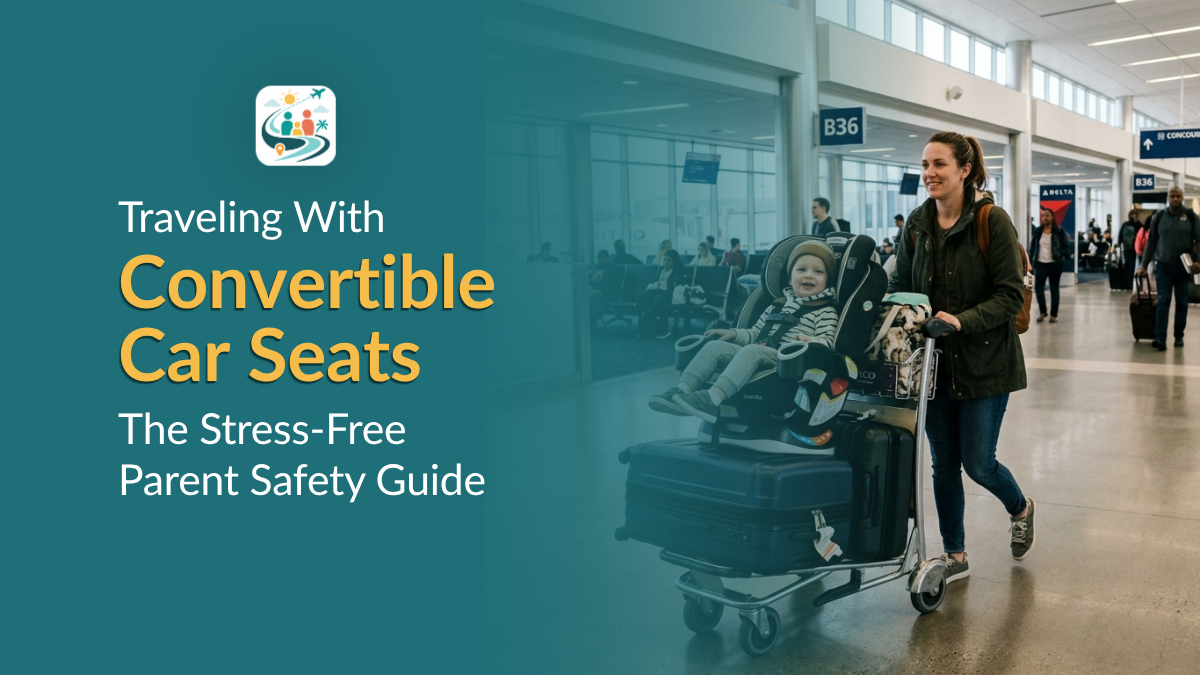
I still remember the first time I lugged our convertible car seat through airport security with a cranky toddler on one hip and a diaper bag sliding off my shoulder — I was so sure the gate agent was going to tell me it wasn’t allowed onboard. Traveling with young children can already feel stressful, and adding a convertible car seat into the mix often makes parents even more anxious. As a result, they’re left wondering if the seat will fit in narrow airplane seats, whether airline staff will allow it onboard, or how they’ll carry something so heavy through crowded terminals while managing bags and an exhausted toddler.
On top of that, parents worry about installing the seat correctly and keeping their child secure if turbulence hits mid-flight. These concerns are incredibly common, especially for families whose kids have just outgrown their infant car seat and are facing their first trip with a bigger, bulkier convertible seat.
From safety research and plenty of real parent travel experience (including my own), these fears are completely understandable. Convertible car seats are bulky and sometimes awkward to travel with, but they still provide one of the highest levels of protection for young children during both flights and road travel. Because of this, aviation safety experts and child passenger safety specialists strongly recommend using a proper car seat whenever possible — and once you’ve done it a few times, it really does get easier. With the right preparation and clear guidance, you can travel more confidently while keeping your child safe and comfortable throughout the journey. For everything beyond the car seat, see our complete guide to flying with a baby or toddler.
What Is a Convertible Car Seat?
A convertible car seat is designed to grow with your child, which is exactly why so many parents love it for travel. It can be used in two ways:
- Rear-facing for babies and younger toddlers
- Forward-facing for older toddlers and preschool children
Most parents switch to convertible seats after their baby outgrows an infant seat, often somewhere between 12 and 24 months depending on the child’s size. In addition, these seats offer strong protection during crashes and turbulence, which is exactly why they’ve become so popular for travel safety, and many families find the investment pays off over several years of use rather than buying a new seat for every stage.
Why Parents Choose Convertible Car Seats for Travel
Convertible car seats help parents balance safety and comfort, and once you’ve used one on a trip, it’s easy to see why so many families stick with them. Families often choose them because they:
- Provide strong protection during turbulence
- Help children sleep better during flights
- Ensure safe transportation at travel destinations
- Reduce parental safety anxiety
Many parents report calmer children when using familiar seating during travel, and I noticed the same thing with my own kids — having their “regular” car seat onboard made the whole flight feel a little more like home.
Can You Bring a Convertible Car Seat on an Airplane?

Yes, and most airlines allow convertible car seats as long as they’re FAA-approved, so this is one less thing to stress over once you’ve confirmed your seat qualifies.
Look for a label stating:
“This restraint is certified for use in motor vehicles and aircraft.” See FAA-approved car seats for airplanes for which models qualify and where the label sits.
You can confirm current requirements anytime on the FAA’s official child safety seat page.
Airlines generally allow approved seats if:
- Your child has their own airplane seat
- It installs safely
- The seat does not block passenger movement
Should You Bring the Seat Onboard or Check It?
Parents often struggle with this decision, and honestly, there’s no single right answer for every family — it depends on your child’s needs, your seat’s weight, and how much you’re already juggling.
Safety experts strongly recommend using car seats onboard whenever possible, since turbulence is unpredictable and can happen even on a calm, clear-sky flight without any warning.
Will a Convertible Car Seat Fit in an Airplane Seat?
Most airplane seats are narrow, so fit is one of the first things to check before you travel. Many airlines recommend car seats around 16 inches wide or less for easier installation, since anything wider can make buckling the lap belt or lowering the armrest difficult.
Where Can You Install a Car Seat on a Plane?
Airlines usually require:
- Window seat placement
- No installation in exit rows
- The seat must not block passenger escape paths
In fact, flight attendants may verify installation before takeoff, so it’s worth getting it secured early rather than waiting until the last minute when the cabin gets busy.
Rear-Facing vs Forward-Facing During Flights
Rear-Facing Travel
Rear-facing offers the best protection for babies and young toddlers, since it supports the head and neck during sudden movement, though it may require a bit more space than some airplane rows can comfortably offer.
Forward-Facing Travel
Forward-facing seats are easier to install and may offer better passenger comfort for older kids. Use forward-facing only if your child meets the manufacturer’s height, weight, and age guidelines.
How to Install a Convertible Car Seat on an Airplane

Airplanes don’t include LATCH anchors, so installation requires using the airplane’s lap belt instead — this trips up a lot of first-time travelers who are used to clicking a LATCH connector at home.
Rear-Facing Installation
- Place seat facing backward
- Route belt through rear-facing belt path
- Tighten firmly
- Confirm correct seat angle
Forward-Facing Installation
- Place seat forward-facing
- Route belt through forward belt path
- Tighten securely
- Confirm seat moves less than one inch
Practicing installation before travel builds confidence, and doing a trial run at home in your own car can save you a lot of fumbling once you’re actually on the plane. For the full walkthrough, see how to install a car seat on an airplane.
How to Carry a Convertible Car Seat Through the Airport

Convertible seats are heavy and bulky, which causes major travel stress for parents, especially when you’re also pushing a stroller or chasing a toddler who wants to “help” with the luggage.
Helpful transport options include:
- Attaching seat to rolling luggage
- Using a travel cart
- Strapping seat to stroller
- Using padded carrying backpacks
Many parents prefer travel carts because children can sit in the seat while moving through terminals, which frees up your hands and keeps your toddler contained during long walks to the gate.
Convertible Car Seat vs Travel Car Seat vs CARES Harness
| Option | Safety Level | Travel Convenience | Vehicle Use | Best For |
|---|---|---|---|---|
| Convertible Car Seat | Highest | Heavy & Bulky | Yes | Full travel protection |
| Travel Car Seat | Moderate | Lightweight | Yes | Frequent flyers |
| CARES Harness | Moderate | Very Lightweight | No | Older toddlers & preschoolers |
Convertible seats remain the safest overall travel solution, even though they ask a little more of you in terms of effort and packing space.
Gate-Checking vs Checking With Luggage
Gate-Checking
- Less handling risk
- Faster return after landing
Checking With Luggage
- Higher damage risk
- More handling exposure
Damage Prevention Checklist
- ✓ Use padded travel bag.
- ✓ Remove accessories.
- ✓ Label seat clearly.
- ✓ Inspect seat immediately after arrival.
Our full guide to gate-checking car seats covers the tagging process and what to do if yours arrives damaged.
What If Airline Staff Refuse Your Car Seat?
If this happens:
- Point out the FAA approval label
- Share the manufacturer instructions
- Politely request assistance
- Ask for alternate seating
Most issues resolve quickly with proper documentation, so it’s a good idea to keep a printed copy of your seat’s manual and approval label in your carry-on just in case.
Using Convertible Car Seats in Rental Cars and Rideshares
Convertible seats help families stay safe at travel destinations, and they’re especially useful if you’re planning to drive around a lot once you land, whether that’s picking up a rental car or hopping into rideshares.
Installation tips:
- Install with the seat belt when anchors are unavailable
- Tighten seat firmly
- Use top tether for forward-facing seats
- Review vehicle manual
Best Travel Strategies by Child Age
Babies & Young Toddlers
Rear-facing travel offers the highest protection and is the safest choice for this age group on both flights and car rides.
Older Toddlers
Forward-facing improves installation ease and tends to be more comfortable for kids who are tall enough and old enough to meet the seat’s guidelines. See car seats for toddlers on planes for age-specific picks.
Preschool Children
Some families switch to harness travel systems like the CARES harness if their child meets the size and weight limits, since these are lighter and easier to carry through the airport.
Convertible Car Seat Travel Packing Checklist
Travel Packing Checklist
- ✓ Car seat travel bag
- ✓ Installation manual
- ✓ Cleaning wipes
- ✓ Extra clothing
- ✓ Comfort toys or blankets
- ✓ Seat protectors
- ✓ Travel cart or stroller attachment
Common Mistakes Parents Make
Even experienced travelers slip up sometimes, so here’s what to watch for:
- Forgetting FAA approval label
- Installing in exit rows
- Attempting to use LATCH anchors on airplanes
- Checking seat without protection
- Skipping installation practice
What If the Seat Does Not Fit?
If installation doesn’t work out, you still have options. Here’s what to try:
- Ask flight attendants for help
- Request seat reassignment
- Gate-check only if necessary
Real Travel Challenges Parents Experience
Plenty of parents feel overwhelmed carrying convertible seats through crowded terminals, and I’ve definitely had that moment of pure panic juggling a car seat, a stroller, and a screaming toddler while the boarding line moved faster than I could keep up. Long security lines, limited airplane space, and tired toddlers can all add up and increase frustration fast. If a stroller is coming too, see taking a stroller through airport security. However, real family travel experience shows that preparation makes the biggest difference. For instance, practicing installation ahead of time and building in extra time at the airport significantly reduces travel stress for the whole family.
Safety Tips for Smooth Travel
- Practice installation before travel
- Board early when possible
- Carry printed instructions
- Bring comfort items
- Allow extra airport time
Frequently Asked Questions
Yes — if you want to use a convertible car seat onboard, your child needs their own paid airplane seat. Car seats can’t be secured properly on a parent’s lap, so this is one expense that’s worth planning for ahead of time. If you’re weighing the cost, see flying with a lap child for the full comparison.
No, booster seats aren’t allowed on airplanes because they’re designed to work with a shoulder belt, and most airplane seats only have a lap belt. A convertible seat with its own harness is the safer choice for flying.
Yes, an FAA-approved car seat that’s properly installed provides strong protection if turbulence hits, which is exactly why so many safety experts recommend using one onboard rather than holding your child in your lap.
Airlines can only refuse your seat if it blocks the evacuation path or can’t be secured safely in the available space. Showing your FAA approval label and manufacturer instructions usually clears up any confusion quickly.
No, airplanes don’t have LATCH anchor points, so you’ll always need to install your convertible car seat using the airplane’s lap belt instead, even if you’re used to LATCH installation in your car.
Conclusion
Traveling with a convertible car seat may feel overwhelming at first, and many parents question whether the extra effort is really worth it. Based on expert safety recommendations and real family travel experience, using an approved car seat during flights provides one of the safest travel options for young children. Parents who prepare early, practice installation, and understand airline policies usually experience less stress and smoother travel days. Managing children, luggage, and airport logistics can be challenging, but the safety and comfort benefits make it worthwhile. With preparation, patience, and the right travel strategies, families can protect their child and enjoy travel with greater confidence and peace of mind.


